
From poor harvests to 7.5 tonnes per hectare: Solobati Phiri’s journey of agricultural transformation
By Ushely Joseph
In the fertile plains of Dole Camp in Katete District, Eastern Province, where the rhythms of life are deeply intertwined with the land, the story of Solobati Phiri is quietly redefining what is possible for smallholder farmers in the face of climate change, declining soil fertility, and environmental degradation.
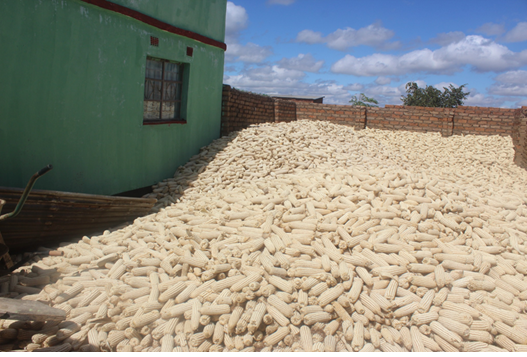
A bumper maize harvest at Mr. Solobat Phiri’s homestead showcases the benefits of sustainable farming practices and land restoration efforts in Katete District
What was once an ordinary 2.5-hectare field struggling under the weight of exhausted soils and unpredictable rainfall has today become a thriving symbol of resilience, innovation, and sustainable agricultural transformation.
A lead farmer under the Eastern Province Jurisdictional Sustainable Landscape Programme (EP-JSLP), Mr. Phiri has emerged as one of the district’s most inspiring examples of how agroforestry and climate-smart agriculture can restore degraded land while simultaneously improving livelihoods and household food security.
For years, farming was an increasingly difficult undertaking for Mr. Phiri and many other smallholder farmers in the area. Poor harvests, prolonged dry spells, declining soil productivity, and recurring climate shocks made it difficult for farming households to produce enough food and generate stable incomes.
Like many communities across Eastern Province, Dole Camp has not been spared from the devastating effects of environmental degradation and unsustainable land-use practices, which over time weakened soil fertility and reduced agricultural productivity.
Yet amid these challenges, a quiet transformation began to take root. Through interventions implemented under the EP-JSLP a programme spearheaded by the Government of Zambia through the Ministry of Green Economy and Environment with support from the World Bank under the BioCarbon Fund Initiative for Sustainable Forest Landscapes (ISFL) farmers such as Mr. Phiri have been equipped with practical knowledge and sustainable farming techniques aimed at restoring landscapes while strengthening resilience among rural communities.
The programme promotes agroforestry, conservation agriculture, sustainable land management, forest restoration, and Farmer Field School approaches designed to help communities adapt to climate change while improving agricultural productivity.
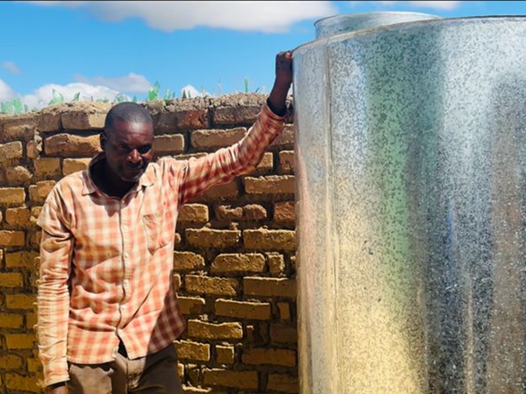
Mr. Solobat Phiri displays a metal silo used for safe maize storage, enhancing food security and supporting climate-smart agriculture among smallholder farmers through interventions supported by the EP-JSLP.
For Mr. Phiri, embracing these interventions marked a turning point. Through the integration of agroforestry tree species into his 2.5-hectare farming system, coupled with conservation farming methods and improved soil management practices, he gradually began restoring the health and productivity of his land.
Today, the transformation is impossible to ignore. Rows of healthy maize fields now stretch across land that once struggled to produce meaningful harvests. Trees carefully integrated within the farming system stand tall across the landscape, silently performing the critical ecological functions that have helped restore life to the soil.
The results have been extraordinary. From his 2.5 hectares of cultivated land, Mr. Phiri is now recording maize yields of up to 7.5 tonnes per hectare a remarkable achievement that has earned him recognition as one of the district’s model farmers under the programme.
Large quantities of harvested maize drying within his homestead now stand as visible testimony to the immense benefits of integrating sustainable land restoration practices into farming systems.
Speaking during a recent familiarisation tour conducted by Eastern Province Permanent Secretary Paul Thole under the EP-JSLP, Mr. Phiri reflected on the remarkable journey that transformed both his farm and his outlook on agriculture.
“These trees have completely changed the condition of our fields. The soil is healthier, moisture stays in the ground longer, and crops are able to withstand difficult weather conditions better than before. Agroforestry has taught us that farming and environmental conservation must go together,” he explained.
Mr. Phiri noted that before adopting sustainable land management practices, poor soils and inconsistent rainfall patterns often resulted in disappointing harvests that threatened household food security.
However, through continuous learning under the Farmer Field School model and practical implementation of agroforestry interventions, productivity steadily improved over time.
Beyond increased production, Mr. Phiri emphasized that sustainable farming must also be accompanied by proper post-harvest management if farmers are to fully benefit from their labor.
He spoke passionately about the importance of metal silos in reducing post-harvest losses and safeguarding food reserves.
“In the past, many farmers lost significant amounts of maize because of poor storage systems, pests, and moisture damage. With metal silos, we are now able to safely store our maize for long periods while maintaining its quality. Farmers can preserve food for their families and also wait for better market prices before selling,” he said.
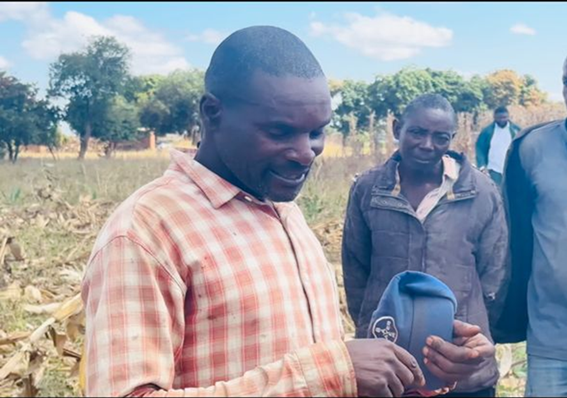
According to Mr. Phiri, the introduction of improved grain storage technologies has become an important pillar in strengthening food security and improving household incomes within farming communities.
His success story has now become a source of inspiration for many surrounding farmers, with his field increasingly serving as a practical demonstration site where fellow farmers come to observe first-hand the benefits of agroforestry and climate-smart agriculture.
Supporting Mr. Phiri’s testimony, Senior Agricultural Officer Kaluba Mulenga described agroforestry as one of the most effective long-term solutions to the growing challenges of climate change and land degradation affecting smallholder farming communities.
Mr. Mulenga explained that the Farmer Field School approach under the EP-JSLP has played a vital role in empowering farmers through practical learning, peer-to-peer knowledge exchange, and hands-on demonstrations.
“What we are witnessing in farmers like Solobat Phiri is the true impact of sustainable agriculture. These interventions are not only improving crop yields but are also restoring degraded soils, strengthening household resilience, and helping communities appreciate the importance of environmental stewardship,” said Mr. Mulenga.
He further noted that agroforestry contributes significantly to biodiversity conservation, erosion control, soil regeneration, and improved water retention, making it an essential component of sustainable agricultural development.
Meanwhile, EP-JSLP Project Officer for Katete and Sinda Districts, Chewe Kabwe, commended farmers for embracing sustainable land restoration interventions and taking ownership of the programme’s objectives.
Mr. Kabwe observed that the positive results being recorded by lead farmers such as Mr. Phiri demonstrate the enormous potential of climate-smart agriculture in transforming rural livelihoods while protecting the environment.
“The EP-JSLP is about creating sustainable landscapes where communities can thrive economically while safeguarding natural resources for future generations. The success stories emerging from Katete clearly demonstrate that when farmers are empowered with knowledge and practical solutions, meaningful transformation becomes possible,” Mr. Kabwe said.
He added that the programme’s integrated approach combining agroforestry, conservation farming, Farmer Field Schools, and environmental restoration was steadily helping communities build resilience against climate-related shocks while improving agricultural productivity.
Today, Mr. Phiri’s journey stands as more than just a personal success story. It is a living testament to the power of sustainable agriculture, community participation, and environmental restoration in rebuilding hope for rural farming communities.
In the once-struggling fields of Dole Camp, the land is breathing again. Trees now stand side by side with thriving crops, harvests are steadily increasing, and farmers are beginning to see agriculture not merely as survival, but as a pathway toward resilience, prosperity, and sustainability.
And at the centre of that transformation stands Mr. Solobat Phiri a farmer whose restored 2.5-hectare field is now cultivating far more than maize; it is cultivating hope for an entire generation. NAIS
#Agriculture #ClimateSmartAgriculture #Agroforestry #SustainableFarming #FoodSecurity #LandRestoration #FarmerFieldSchools #ClimateResilience #EnvironmentalConservation #EasternProvince #KateteDistrict #ZambiaAgriculture #SmallholderFarmers #SustainableDevelopment #GreenEconomy #EPJSLP #RuralTransformation #MaizeProduction #SoilHealth #SuccessStory